Top 3 Pollination Partners for Pears, A Leading UK Nursery Specialist Reveals
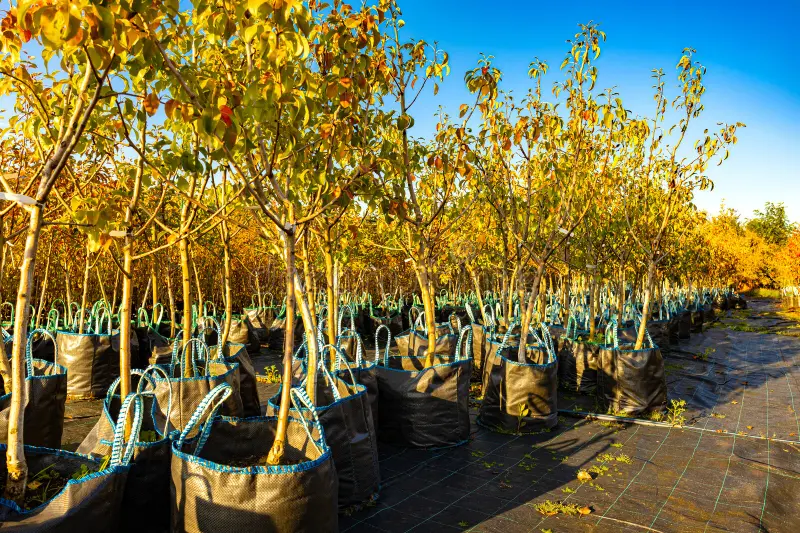
While apples often steal the limelight in British orchards, the pear tree offers a complexity of flavour and a historical richness that few other fruits can match. However, for many enthusiasts who decide to buy fruit trees for their garden, the pear remains a source of frustration. Trees may grow vigorously and blossom profusely, yet fail to set fruit year after year. The culprit is almost invariably a lack of suitable pollination. Unlike many modern crops bred for uniformity and self-sufficiency, the finest heritage pears rely on a biological partnership to thrive. Understanding this alliance is the key to unlocking heavy yields of melting, buttery fruit.
The mechanism of pollination in pears is governed by a genetic compatibility system that prevents a tree from fertilising itself, thereby encouraging diversity through cross-pollination. This system divides varieties into specific flowering groups based on when they bloom in the spring. For a gardener, the goal is not merely to plant a tree but to orchestrate a synchronised performance between two or more distinct varieties. This requirement often catches out novices who assume a single specimen will suffice. While some varieties claim self-fertility, expert consensus suggests that even these independent types perform significantly better with a partner. The “fresh” angle on this age-old horticultural rule is to view your pollinator not just as a biological necessity, but as a culinary asset—a second distinct variety that extends your harvest season and diversifies your pantry.
A nursery specialist from CRJ Fruit-Trees notes: “We frequently encounter customers who are disappointed by a lack of fruit on healthy, mature trees, and the issue is almost always isolation. Pears are sociable plants that require specific companions to crop to their full potential. When planning your orchard, it is essential to look beyond the single variety you desire and consider the relationship between flowering times. We always advise that you check the pollination group before you purchase. Selecting compatible pear trees ensures that your blossoms are viable at the exact same moment, which is the only way to guarantee a successful harvest. A well-chosen pair will not only solve the yield problem but will often improve the size and quality of the fruit itself.”
Decoding the Flowering Groups
To select the perfect partners, one must first understand the classification system used by British horticulturalists. Pears are categorized into pollination groups, typically labelled A through E or numerically from 1 to 5. Group A varieties are the earliest to bloom, often risking frost damage in northern regions, while Group E varieties flower late in the spring. A variety in Group C, for example, will overlap perfectly with other Group C trees, but it will also cross-pollinate successfully with trees in the adjacent Groups B and D. This overlapping window is crucial. It provides a safety net against erratic spring weather which might accelerate or delay the blossoming of one tree over another.
The complexity deepens when we consider the genetics of the pollen itself. Most pear trees are diploids, meaning they have two sets of chromosomes and produce viable, abundant pollen. These are the ideal partners. However, some classic heavyweights of the pear world are triploids. These varieties possess three sets of chromosomes, rendering their pollen sterile and useless to others. If you plant a triploid, it can receive pollen, but it cannot give it back. This creates a “dead end” in the orchard unless a third tree is introduced to complete the chain. This biological nuance explains why simply planting two trees is sometimes insufficient if one of them happens to be a genetic outlier. The top three pollination partners identified here are all reliable diploids, selected for their generous pollen production, overlapping flowering times, and their own exceptional fruit quality.
The Reliable Backbone: Conference
The first and most indispensable partner in any British pear orchard is the venerable Conference. Originating in Hertfordshire in the late 19th century, it was named to commemorate the National British Pear Conference of 1885. Its enduring popularity is not an accident of history but a result of its extraordinary reliability. Conference sits firmly in Group 3 (or Group C), placing it squarely in the middle of the flowering season. This central position makes it the “universal donor” of the pear world, capable of catching the tail end of early bloomers and the first flush of late bloomers. It is the diplomatic bridge that connects varieties which might otherwise miss each other.
Conference is technically classified as self-fertile, a trait that allows it to produce a crop even in isolation. However, this label can be misleading. While a solitary Conference will produce fruit, the yields are often lighter, and the fruits can be parthenocarpic—seedless and sometimes misshapen (often resembling a banana). When paired with a compatible partner, the difference is night and day. The cross-pollinated fruit is larger, more regular in shape, and the tree retains more of its crop through the “June drop.” Furthermore, because Conference is so generous with its own viable pollen, it acts as a catalyst for almost any other Group 3 pear you might wish to grow. It is the safest bet for the uncertain gardener and the solid foundation upon which to build a diverse collection.
The Historic Companion: Williams’ Bon Chrétien
If Conference is the reliable backbone, Williams’ Bon Chrétien is the charismatic partner that brings history and flavour to the table. Known simply as the Bartlett pear in North America, this variety is an English original, raised in Berkshire in the 1770s. It is perhaps the most famous pear in the world, responsible for the classic “pear drop” flavour profile—sweet, musky, and incredibly juicy. Like Conference, Williams’ Bon Chrétien is a Group 3 (Group C) flowerer, making the two varieties arguably the most perfect marriage in fruit growing. They bloom in perfect sync, exchanging pollen freely and ensuring heavy crops on both trees.
The value of Williams as a pollination partner lies in its precocity and volume of bloom. It tends to flower heavily even on younger wood, providing an abundance of pollen early in the life of the orchard. This is particularly beneficial if you are trying to establish a new planting and want to ensure early success. The fruit itself offers a perfect counterpoint to Conference. While Conference is a mid-to-late season pear that stores well, Williams is an early-season variety that must be eaten almost immediately off the tree in September. By planting these two together, you not only solve your pollination issues but also stagger your harvest, enjoying the ephemeral, melting flesh of Williams in early autumn and the firm, keeping qualities of Conference later in the year.
The Connoisseur’s Choice: Beurré Hardy
For the third top partner, we look to France and the exquisite Beurré Hardy. While varieties like Doyenné du Comice are often cited for their flavour, Comice can be a temperamental partner due to its irregular flowering. Beurré Hardy, conversely, is a robust and vigorous tree that acts as a powerhouse of pollination. Also sitting in Group 3, it is fully compatible with both Conference and Williams, completing a “holy trinity” of orchard stability. Originating from the mid-19th century, it is known for its rose-water scented flesh and absolute lack of grit, offering a texture that truly lives up to the name beurré (buttered).
Beurré Hardy is particularly valuable in organic or low-intervention gardens because of its strong growth habit and disease resistance. As a pollination partner, it is prolific. Its flowers are large and attractive to bees, drawing pollinators into the area and increasing the traffic between trees. It effectively “boosts” the signal of the orchard. While it can be slow to come into bearing compared to the precocious Williams, once established, it provides a consistent annual bloom that secures the crop for its neighbours. For gardeners looking to buy fruit trees that offer something different from the supermarket standards, Beurré Hardy provides a gourmet eating experience while serving the utilitarian function of a high-grade pollen donor.
The Challenge of Triploids and Spatial Planning
Understanding these top partners also requires acknowledging the varieties they support. Many gardeners are drawn to the massive cooking pears like Catillac or the historic Pitmaston Duchess. These are the triploids mentioned earlier. If you were to plant a Catillac and a Conference, the Conference would pollinate the Catillac, but the Catillac would offer nothing in return. The Conference would effectively be growing in isolation, resulting in a poor crop for the pollinator itself. In this scenario, a third tree—such as Williams or Beurré Hardy—is mandatory. This “triangle of pollination” ensures that the two diploids pollinate each other, while both contribute to the needy triploid.
Spatial planning is just as critical as variety selection. Pollen is heavy and sticky; it is not carried by the wind like the dust-like pollen of grasses. It must be physically transported by an insect, usually a honeybee, bumblebee, or solitary mason bee. These insects are efficient but energy-conscious. In cool British springs, they will not fly vast distances between trees. For effective cross-pollination, your partners should ideally be planted within 15 to 20 metres of each other. If you have a large garden, placing incompatible blocks of trees too far apart is a common error. Interplanting your partners—perhaps alternating a Conference with a Williams—creates a “pollen corridor” that maximizes the chances of a bee visiting both varieties on a single foraging trip.
Environmental Factors Influencing Success
Even with the perfect trio of Conference, Williams, and Beurré Hardy, environmental factors can disrupt the transfer of pollen. The most significant barrier is temperature. Pears blossom early in the year, often before apples, which leaves them vulnerable to late frosts that can kill the internal organs of the flower. Furthermore, honeybees are reluctant to fly in temperatures below 10°C or in heavy winds. This is where the choice of site becomes a pollination issue. Planting your pears in a sheltered, sunny spot not only ripens the wood for next year’s buds but creates a microclimate that encourages insect activity during the critical blossoming window.
Gardeners can further assist this process by cultivating a pollinator-friendly environment at ground level. A sterile lawn beneath fruit trees offers no alternative food sources for bees. By allowing dandelions to bloom early or planting lungwort (Pulmonaria) and primroses near the base of the trees, you attract early-season insects to the area before the pear blossoms fully open. Once the trees bloom, these insects are already present and ready to work. It is also worth noting that pear nectar is relatively low in sugar compared to other flowers. If highly attractive competitors like dandelions are too abundant during the exact week of pear blossom, bees might ignore the trees. A balanced approach—mowing the immediate area just as the trees open—can force the bees upwards into the canopy.
Long-Term Orchard Management
Once you have selected and planted your pollination partners, the long-term maintenance of the trees ensures they continue to flower in sync. Pruning plays a vital role here. Pears fruit on “spurs”—short, stubby side shoots that develop over years. Hard pruning that encourages vigorous vegetative growth can sometimes strip away these spurs or force the tree into a cycle of wood production rather than flower production. A gentle pruning regime, often performed in summer for established trees, calms the growth and promotes the formation of fruit buds. This ensures that when spring arrives, your partners are not just compatible in theory, but are physically carrying enough blossom to facilitate the cross-pollination process.
Ultimately, the decision to plant a pear tree is a commitment to the future. By choosing a partner like Conference, Williams, or Beurré Hardy, you are investing in a system of mutual support that pays dividends in bushels of fruit. It is a reminder that in nature, independence is often less fruitful than cooperation. Whether you are looking to fill a small allotment or a large country garden, remembering the golden rule of pollination partners will save years of disappointment. So, before you rush out to buy fruit trees this season, take a moment to look at the groups, check the flowering times, and plan for a partnership that will last for decades.